Spotlight

About
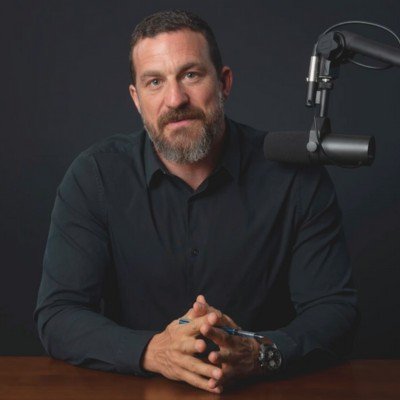
Andrew Huberman, Ph.D., is a tenured associate professor in the Departments of Neurobiology and Ophthalmology at Stanford University School of Medicine, where he directs the Huberman Lab. His research focuses on brain development, visual perception, neural plasticity, stress and resilience mechanisms, and repair from blinding diseases like glaucoma. Huberman earned his B.A.
in psychology from the University of California, Santa Barbara in 1998, an M.A. from UC Berkeley in 2000, and a Ph.D. in neuroscience from UC Davis in 2004, receiving the Allan G.
Marr Prize for the best dissertation. He completed postdoctoral research at Stanford from 2005 to 2010 as a Helen Hay Whitney Fellow before joining the faculty at UC San Diego from 2011 to 2015, and returning to Stanford in 2016. Huberman's lab has pioneered discoveries in visual circuit development, motion processing, circadian rhythms, threat detection, neural regeneration, and non-pharmacological interventions for anxiety using virtual reality and breathing techniques.
His work has been published extensively in top journals such as Nature, Cell, Science, and Neuron. Beyond academia, he hosts the Huberman Lab podcast, launched in 2020, which translates complex neuroscience into actionable protocols for optimizing health, performance, and well-being, amassing millions of listeners and establishing him as a leading voice in science communication. He also teaches neuroanatomy to Stanford medical students and has contributed to editorial boards and committees in neuroscience.
Career Highlights
- Directed the Huberman Lab at Stanford, advancing research on visual system regeneration using virtual reality, published in Nature, Cell, Science, and Neuron.
- Launched the Huberman Lab podcast in 2020, bridging neuroscience with public health protocols on stress, sleep, and performance.
- Pioneered non-pharmacological anxiety treatments via VR exposure therapy and breathing techniques during faculty roles at UCSD and Stanford.
- Developed genetic tools for studying the visual system during postdoctoral work at Stanford, earning the Helen Hay Whitney Fellowship.