

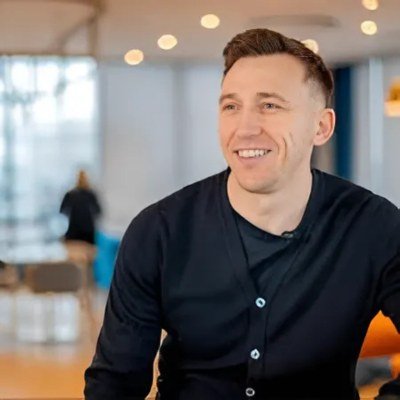
Gary Rhodes opens with a compelling personal story: his 79-year-old grandmother's osteoporosis diagnosis and the medical establishment's prescription to simply "manage the decline." Rejecting this fatalistic approach, Rhodes embarked on a journey to reverse her condition, leading him from a Tony Robbins event to a NASA engineer who reframed osteoporosis not as a disease, but as deconditioning—something that can be reconditioned. This revelation forms the foundation of Rhodes's work with Screen My Bones and his advocacy for proactive bone health assessment and intervention.
The session moves beyond theory into immediate demonstration. Rhodes leads the audience through a simple balance test—standing on one leg, looking up, closing eyes—revealing how few people recognize their own stability deficits. He explains the critical connection between balance, stability, and strength, noting that his grandmother's primary challenge wasn't the osteoporosis diagnosis itself but the loss of confidence and fear of falling. The statistics are sobering: 15-30% of people over 65 who break a hip die within 12 months. Rhodes then introduces Power Plate vibration training, demonstrating how it increased his grandmother's balance by 70% in just five sessions by creating instability to wire and fire neural pathways. Through live volunteers, he shows the immediate impact of vibration training on proprioception and stability.
Rhodes addresses a critical gap in current health optimization practices: most people don't receive bone density scans until after 65 or after breaking a bone, yet osteoporosis begins developing at 30 or earlier. He introduces the concept of osteogenic loading—safely loading the skeletal system without injury risk—drawing parallels to how gymnasts develop exceptional bone density through impact and compression. The body's skeletal system responds to mechanical stress by compressing, expanding, recalcifying, and pulling in minerals, a process that can be deliberately triggered through proper training protocols.
This session positions bone health as an overlooked longevity metric that demands the same proactive attention as metabolic markers, hormone levels, or cardiovascular fitness. Rhodes's framework challenges the reactive medical model, advocating instead for early screening and intervention. By connecting bone density to balance, confidence, independence, and ultimately lifespan, he makes the case that skeletal strength isn't just about preventing fractures—it's about maintaining the physical foundation required for an active, autonomous life well into advanced age.
Featured Leader
About Screen My Bones
Screen My Bones
Screen My Bones provides affordable bone density scans using REMS technology, a radiation-free method that assesses bone health in the lumba...